

Power Your Service Business with WePro
Power Your Service Business with WePro
Join hundreds of teams automating their success stories.
In home services, most mix-ups start on the phone. WePro keeps call recordings and call logs connected to the customer and the job, so your team can replay what was said, confirm next steps, and follow up with confidence.
Get clearer handoffs between the office and the field, fewer “he said / she said” moments, and better coaching without digging through scattered systems.
Power Your Service Business with WePro
Power Your Service Business with WePro
Join hundreds of teams automating their success stories.
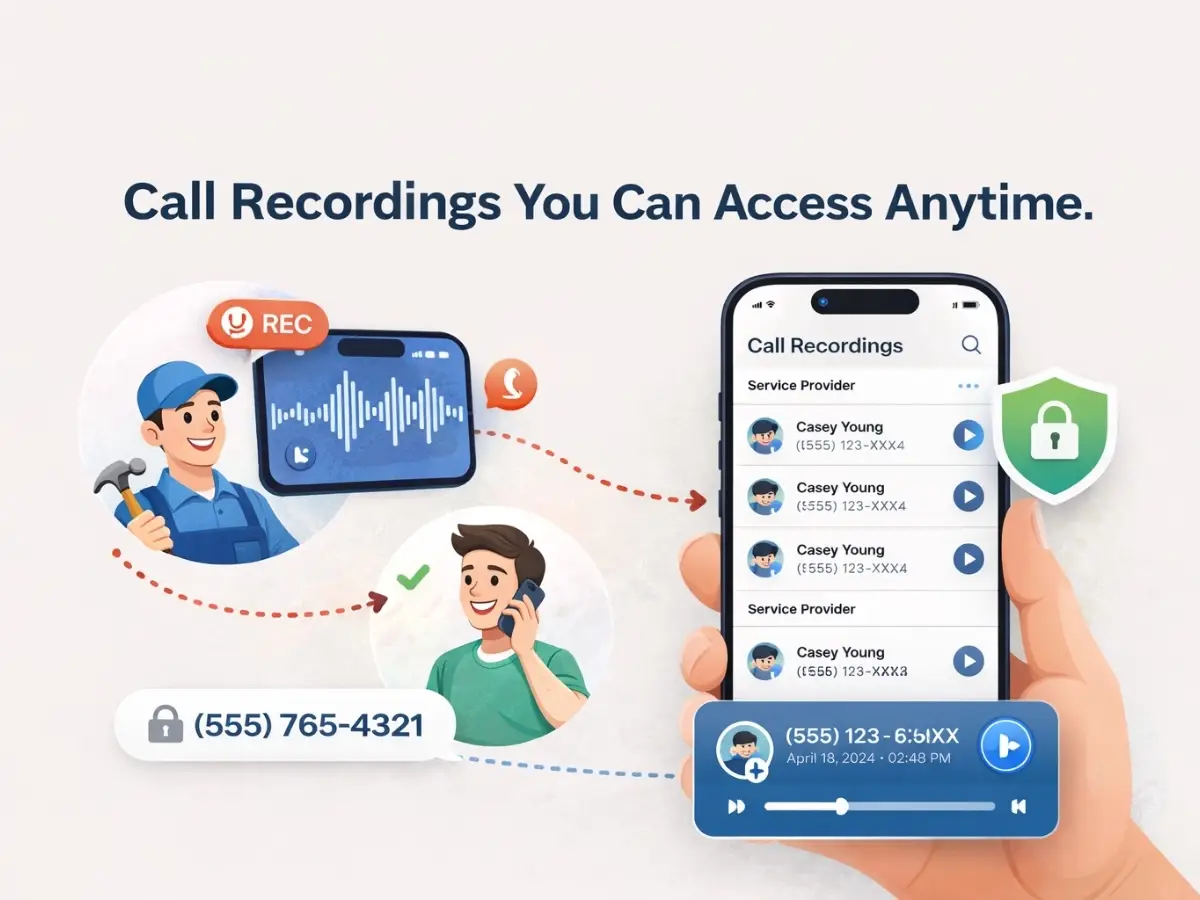

Open customer call history from the job, lead, or customer profile

Add service call notes during call review so the team knows what to do next
Record calls and save them to the right customer and job

Every day, your office takes calls about pricing, timing, access notes, warranties, “please call when you’re on the way,” and “the gate code is different.” If those details live only in someone’s memory, they get missed. That creates rework, unhappy customers, and tense conversations between dispatch and technicians.
With WePro, call recordings help your team go back to the source. When a customer says, “I already told you,” you can confirm the exact request and move the job forward. When a tech arrives and the customer claims a different scope, the office can replay the call and align everyone on what was approved.
Call records are most useful when they are connected to the workflow. That’s why WePro keeps dispatch call records and notes close to the job, so your schedule, job status, and communication history stay in one place.
Power Your Service Business with WePro
Power Your Service Business with WePro
Join hundreds of teams automating their success stories.

Calls drive your daily schedule. A call turns into a lead, a lead turns into a booking, and a booking turns into a job that must be dispatched correctly. If the office can’t see what was promised, the tech gets sent with the wrong expectations, or the customer hears something different on the next call.
WePro organizes call logs so office staff can see what happened without asking around. Before a dispatcher moves a job, they can check what the customer requested. Before you send an estimate, your sales team can replay the original conversation with call recordings to confirm the problem and any pricing guardrails you gave over the phone.
When call review is part of the workflow, it’s easier to keep your process consistent. You can spot where calls are going off track, where agents are missing key questions, and where scheduling errors start.
Call recordings help when details change fast: same-day reschedules, emergency calls, and multi-visit repairs. Instead of guessing what was said, your team can replay the call and document the right next step. That keeps your Job Scheduling decisions aligned with what the customer agreed to, supported by Communications and Call Recordings.
Power Your Service Business with WePro
Power Your Service Business with WePro
Join hundreds of teams automating their success stories.

Training is hard when you only hear about calls after there’s a complaint. With sales call review and quality review calls, you can coach using real conversations from your business. That means less arguing about what happened and more focus on what to do differently next time.
Owners and office managers can review how calls are being handled without hovering over the phones. You can check if the team is setting expectations on arrival windows, collecting the right job details, and offering the correct next step. For service managers, call recordings also help confirm what a tech was told before a dispatching change.
Over time, your best calls become your playbook. Save the patterns that work: how your top rep handles objections, how your dispatcher asks the right questions, and how your team de-escalates tough situations. Pair recordings with communications workflows to keep coaching consistent across the team.
Most customer frustration comes from missed handoffs: “Nobody told the tech,” or “The office said you’d bring the part.” After call review, add clear service call notes to the job so the technician sees what matters on arrival. Pair this with Communications so updates and confirmations stay consistent.
Use Call Recordings alongside Jobs Tracking to keep the details tied to the right job.
Power Your Service Business with WePro
Power Your Service Business with WePro
Join hundreds of teams automating their success stories.
Call recordings are only helpful if your team can find them fast. WePro is built for field service workflows, so call logs and recordings fit into the same system your team already uses for leads, scheduling, dispatch, and job tracking.
When a call comes in, your office needs quick answers:
With customer call history available where your team works, you can handle repeat callers calmly, reduce duplicate work, and keep notes consistent.
A customer calls and describes a problem quickly. Later, the technician says it sounds like a different issue. Replay the call, update the job description, and use Dispatching to send the right tech with the right tools.
A customer insists they were quoted a lower price on the phone. Your office can replay the call, confirm what was stated, and decide the next step without guessing, then align the outcome with your Estimates process.
Run sales call review on wins and losses. Listen for missed questions (equipment type, age, symptoms, access details). Then update your call script and intake checklist, and keep follow-up organized with Lead Tracking.
When a customer calls back, the next person can review the last conversation before answering. That cuts down on “let me ask around” and keeps follow-ups on track, especially when your team relies on shared Communications.
If a job gets moved, your dispatcher can check the last call to confirm constraints like “only after 3 PM” or “call before entering the property,” then make updates confidently in Job Scheduling.
| Role | What they do in WePro | Why it helps day-to-day |
|---|---|---|
| Owner / GM | Spot-check quality review calls and patterns | Catch process gaps early and keep standards consistent |
| Office manager | Review customer call history and add service call notes | Fewer escalations and better internal handoffs |
| Dispatcher | Check dispatch call records before scheduling changes | Fewer missed constraints and tighter routing decisions |
| CSR / Sales | Use sales call review to improve close rate and consistency | Better intake, better estimates, fewer surprises |
| Service manager | Verify what was said before a rework or complaint | Faster resolution and clearer accountability |
A recording is useful, but the next step matters more. After listening, capture the outcome in clear service call notes that the whole team can see. Keep notes short and job-focused:
Those notes support your Jobs Tracking process and reduce back-and-forth calls between the office and the tech.
Call recordings work best when they’re part of your full call workflow:
When everything stays connected, your team spends less time searching and more time finishing jobs cleanly.
You’ll notice fewer internal debates about what was said. Dispatchers make changes with more confidence. Technicians show up with better context. Customers get more consistent answers, even when they talk to different people.
Call recordings don’t replace great service. They help your team deliver it consistently, especially on busy days when details slip through the cracks.
Let WePro handle dispatch, updates & payments so your team can finish more jobs with less back & forth.
Power Your Service Business with WePro
Power Your Service Business with WePro
Join hundreds of teams automating their success stories.

Here are quick answers about scheduling, communication, billing, reporting, and getting started with WePro.