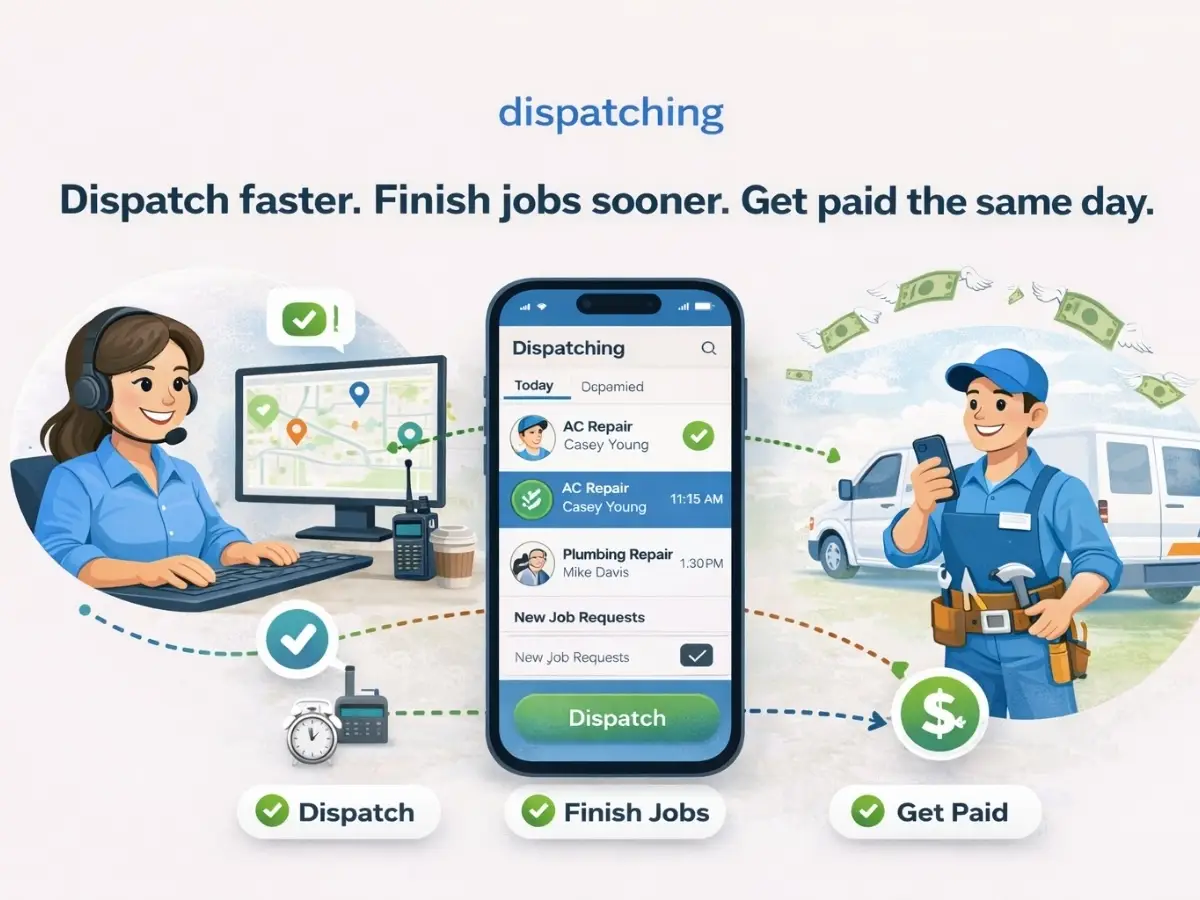
Faster Dispatching for Field Teams That Need to Move

Dispatch faster. Finish jobs sooner. Get paid the same day.

Keep crews busy, not busywork—so morale stays high and margins rise.

What is Dispatching in field service management?

Dispatching is how office teams assign the right job to the right technician at the right time. It blends calendar scheduling, routing, and real-time updates to move work from booked to done without delays. Good Dispatching trims drive time, cuts idle gaps, and keeps customers in the loop with live ETAs. It gives dispatchers a live map, clear priorities, and the power to shift plans mid-day without chaos or double entry.

Schedule smarter

Most teams lose hours to travel, idle gaps, and last-minute shuffles. We Pro cuts that waste. Auto-assign jobs by technician skills, proximity, and traffic, then fine-tune with drag-and-drop. See travel time overlays and capacity heatmaps, so you stack jobs tight and avoid overlaps. Crews start earlier, arrive faster, and finish more jobs per day. Many teams add 1–2 extra calls per truck, cut overtime by double digits, and boost first-time fix rates thanks to better matching. Less back-and-forth. More work done. And invoices go out the same day with fewer errors.

Dispatching for your business with WePro

Coordinate better

Your day rarely goes as planned. A compressor fails, a pipe bursts, or a landlord calls with an access window. We Pro helps you reshuffle on the fly without lost info. Insert emergency calls, swap techs, and reroute with a click. The system checks skills, parts on truck, and current location before suggesting moves, so you don’t send an installer to a delicate diagnostic or a junior to a high-voltage panel. GPS breadcrumbs show who’s closest and who’s about to finish. Dispatchers cut mid-day scramble time, techs get clear next steps, and customers get service within the promised window.

Communicate faster

Most customer calls ask one thing: “When will the tech get here?” We Pro answers that before they dial. Automatic texts confirm appointments, share live ETAs, and ping customers if the schedule shifts. Technicians see job notes, gate codes, and photos in the app, and can chat with the office without breaking stride. Two-way updates slash “Where are you?” calls, keep tenants and owners calm, and help crews move from job to job with fewer interruptions. Faster communication turns into visible wins: fewer no-shows, fewer cancellations, and higher 5-star reviews across HVAC, plumbing, electrical, appliance repair, pest control, and more.

Key capabilities

  • Drag-and-drop calendar: Move jobs across time slots, techs, and crews in seconds so Dispatching reacts instantly to real-world changes.
  • Skill-based routing: Match calls to technicians using a skills matrix and certifications to raise first-time fix rates and cut callbacks.
  • Live ETA texts: Send real-time arrival updates tied to Dispatching events so customers always know who’s coming and when.
  • GPS breadcrumbs: Track tech location points during the day so Dispatching can pick the closest worker and reroute on the fly.
  • Auto-assign rules: Let dispatch automation place new jobs using skills, zones, and drive-time limits, then alert you only for exceptions.
  • Workload balancing: See capacity heatmaps and drive-time totals so Dispatching spreads work evenly and avoids burnout.
  • Emergency drop-in: Insert rush jobs into packed routes with conflict checks so Dispatching fixes breakdowns without derailing the day.
  • Two-way technician chat: Keep office and field aligned inside the dispatch flow so questions get answered and jobs stay moving.
  • Parts and truck stock view: Check required parts against truck stock before dispatch so the right tech rolls with the right gear.
  • Geofenced time tracking: Start and stop on-site time based on location so Dispatching has accurate arrival and departure stamps.

Can I drag and drop jobs on a calendar?**

Yes. We Pro gives you a visual calendar with day, week, and map views built for dispatch speed. Drag any job to a new time or a different tech and we’ll recalc travel time, check for skill conflicts, and warn you about overlaps. Need to move a water heater install to the afternoon because the permit just cleared? Drop it on a qualified plumber with the right certification and truck stock, and the system pushes an update to the tech app and the customer automatically. Color tags show job types, SLAs, and service windows at a glance. Filter by crew, zone, or work order status. You can even park unassigned jobs in a holding lane while dispatch automation suggests the best slot. Every move is logged, so supervisors see who changed what and why. GPS breadcrumbs update ETAs after each drag, so you don’t guess—you dispatch with live data.

How does dispatch automation pick the right tech?**

Dispatch automation uses a technician skills matrix, travel time, and priority rules to suggest the best-fit tech, not just the nearest one. You set rules once—skills, certifications, warranty status, union requirements, shift hours, zones, and max daily miles—and the engine scores each possible match. It factors predicted job duration, current workload, and parts availability from truck stock. For HVAC, it knows a heat pump diagnostic needs a different skill set than a ductless install; for electrical, it respects license class; for plumbing, it checks who carries jetter gear. The engine also looks at previous visits, customer notes, and safety tags. If a return visit is due, it favors the same tech to reduce ramp-up time. Once assigned, the system routes the day to reduce windshield time without breaking promised service windows. Dispatchers still have control: accept, tweak, or override with one click. The result is higher first-time fix rates, fewer callbacks, and smoother days for both office and field.

Will techs and customers get live ETAs?**

They will. As soon as a job is dispatched, We Pro starts tracking the route with GPS breadcrumbs from the technician’s app. We translate that movement into a simple ETA, then send it by text and email so the customer knows the arrival window and can plan. Delay on the freeway? We bump the ETA and notify the customer without you lifting a finger. Techs see their next stop, gate codes, parking notes, and photos on their device, even in low coverage; the app stores data offline and syncs once the signal returns. You can brand messages, add the tech’s photo for security, and mask phone numbers for privacy. For property managers, we can ping tenants and owners separately. For warranty jobs, we include claim numbers. For commercial accounts, we add work order IDs. Live ETAs cut no-access visits, reduce “Where are you?” calls, and raise CSAT while keeping dispatch in control.

Can I handle emergency calls and reshuffle the day without chaos?**

Absolutely. Emergencies happen—a walk-in cooler fails, a sewer backs up, or a heat outage hits on the first cold snap. With We Pro, you can inject a rush job into the schedule and the system proposes the least disruptive move. It checks proximity using GPS breadcrumbs, verifies technician skills, looks at parts on truck, and shows the impact on downstream appointments. One click inserts the job, reroutes the chosen tech, and updates customers with new ETAs. Priority lanes highlight high-SLA contracts, gas leaks, or life-safety calls, so they jump the queue. Use crew chat to share safety notes, lockout/tagout reminders, or access instructions. If weather flips the day, bulk-shift windows and send updates to everyone. You’ll see capacity warnings if you’re overbooking a zone. And if the rush job belongs to an existing customer, CRM sync pulls their site history and assets into the work order instantly, so the tech hits the door with context.

Does Dispatching play nice with CRM, invoicing, and payments?**

Yes—dispatch sits in the middle and keeps everything aligned. Leads and customers live in your CRM; when a call books, CRM sync creates or updates the record and passes site data and contact preferences to the job. As dispatch assigns the work, the job pulls price book items, warranty flags, and contract terms. Once the tech finishes, the app pushes labor, parts, and photos into an invoice draft. From there, the customer can pay in the field or online using digital payments—card, ACH, or financing links. Payments post back to the job and the CRM automatically, and you can push summaries to accounting tools such as QuickBooks or Xero. No double entry, no mismatched names, and no lost job notes. Audit logs show who changed what. For franchises, we support separate price books and taxes by branch, while keeping dispatch views unified. The whole flow moves faster, so cash hits your account sooner and your team spends less time reconciling.

How does Dispatching cut callbacks and overtime?**

Callbacks drain profit and morale. We Pro tackles the root causes. First, the technician skills matrix and dispatch automation send the right person, with the right training and gear, the first time. Second, pre-job checklists and required photos are tied to the dispatch event, so techs confirm model numbers, power source, refrigerant type, or pipe diameter before rolling. The app checks truck stock against the parts list and flags shortages. On site, geofenced time tracking records real arrival and departure, while GPS breadcrumbs back up timecards. If a job runs long, dispatch sees it early and can push noncritical calls to another tech, cutting overtime spikes. After the visit, the system prompts techs for before/after photos, pressure readings, or amp draws, which helps supervisors spot patterns in reporting. KPIs like first-time fix rate, average travel time, and mean time to dispatch surface on dashboards, so you can coach staff and tune routes. Fewer mistakes, fewer re-rolls, and crew hours that fit the plan.

How Dispatching works with the rest of We Pro

Dispatching is the live link between your front office and the field. It starts with scheduling: jobs flow in from phone calls, online bookings, and repeat service plans. Capacity rules keep your calendar honest, so you don’t promise slots you can’t cover. Once booked, dispatch automation matches jobs to techs using the skills matrix and drive-time logic, then lays out efficient routes that honor customer windows and SLAs. Automated messages pick up from there—confirmations, pre-arrival ETAs, and “on the way” texts fire based on dispatch events, cutting manual calls and no-shows.

In the field, the technician app shows job details, notes, and checklists tied to dispatch. GPS breadcrumbs feed live location back to the map, which helps dispatchers make smart mid-day moves and keeps customers updated without guesswork. When the work is done, invoicing kicks in. Price book items, labor, and photos captured on the job build the invoice draft. Digital payments close the loop in minutes, and receipts hit the customer and CRM through the same pipeline. No retyping names, addresses, or line items. Reporting ties it all together. Travel time, on-site time, first-time fix rates, average response, and revenue per truck roll up by tech, team, and branch in real time. That means you can spot late-day bottlenecks, coach routes that drag, and set service windows that actually stick. Everything connects, so double entry disappears and decisions get faster.

Real-world wins

Phoenix HVAC, 22 trucks: Before We Pro, dispatchers juggled a whiteboard, three tabs, and too many “running late” calls. After rollout, auto-assign and live ETAs reshaped their day. Drive time dropped 23% and each truck squeezed in 1.3 more calls on average. Install crews got priority routes with fewer cross-town jumps, so they quit chasing parts. First-time fix rate rose from 68% to 81% by using the technician skills matrix on every call. Digital payments moved cash two days sooner. Reviews improved, phones calmed down, and the team stopped eating dinner at the shop.

Midwest plumbing franchise, 9 branches: Service windows were wide, overtime was wider. We Pro’s Dispatching gave them capacity heatmaps and emergency insertion. Now, burst pipes slide into a priority lane without blowing up the whole schedule. Overtime fell 31% in the first quarter. Callbacks dropped 25% as dispatch automation matched gas line jobs to licensed techs carrying the right sniffer and fittings. GPS breadcrumbs helped prove on-site times to a picky commercial client, ending disputes. CRM sync keeps property manager notes tied to work orders, and billing goes out the same day, shrinking DSO and boosting cash flow.

Buyer questions

Can I drag and drop jobs on a calendar?**

Absolutely, and it’s built for speed. The dispatcher view shows day, week, and route maps side by side. Drag a job tile to a different time, and you’ll see travel time adjust in real time. Drop it on a new tech, and we instantly check the technician skills matrix for a match and warn you if the move breaks a license, union, or SLA rule. Need to close a gap caused by a cancellation? Pull a nearby call from the unassigned lane and drop it in, then push ETA updates to the customer with one click. Every action logs to the job history, so supervisors can audit changes. GPS breadcrumbs update the tech’s route after each drag, and the technician app pings with the new plan. Use color codes for installs, diagnostics, maintenance, and warranty work. Filter by zone or branch. It’s the control board your team wants, without the clutter.

How does dispatch automation pick the right tech?**

It weighs the factors that actually matter to field work. We Pro’s rules look at skills, certifications, and past job history, then blend in distance, traffic, and current workload. The engine checks truck stock for required parts and tools—think recovery machine, vacuum pump, jetter tips, or ladder height. It honors service windows and SLAs, and it won’t place a commercial rooftop call on a residential-only crew. If the job is a return visit, it prefers the same tech to cut diagnosis time. For electrical, it respects license class; for plumbing, it knows which crews handle gas; for HVAC, it spots R-410A vs. R-32. Dispatchers can set preferences for zones, shift splits, and max daily miles. Scorecards show why a tech was picked, so you can trust the call or override with context. Over time, performance data feeds back, improving first-time fix rate and reducing windshield time.

Will techs and customers get live ETAs?**

Yes, and they’re accurate. The technician app sends GPS breadcrumbs during the shift, which power real-time ETAs. Customers receive a branded message with the tech’s name, photo, and a live arrival countdown. If traffic slows, the ETA shifts and an update goes out automatically. Tenants can confirm access from the link, and owners can reply with extra notes. For gated sites or rural jobs, the link includes driving instructions captured by the last visit. Technicians see the same ETA, plus job notes, asset history, and required forms. If cell coverage dips, the app caches activity and syncs later, so ETAs don’t vanish. Numbers are masked to protect privacy. You can set quiet hours for messages and customize timing by industry—tight windows for emergency response, wider for installs. Live ETAs reduce no-access visits, smooth customer expectations, and give dispatchers fewer fires to put out.

Can I handle emergency calls and reshuffle the day without chaos?**

Yes. Emergencies get a clear lane. Tag a job as urgent and We Pro scans live routes, GPS locations, and the technician skills matrix to find the best slot with the least disruption. The system shows the ripple effect on downstream calls and suggests who can absorb the shift. Insert the job, and dispatch automation reroutes the selected tech, sends ETAs to all affected customers, and posts an alert in the technician app. For gas leaks or sparking panels, you can push safety notes, lockout/tagout steps, and utility contact numbers in the same move. Weather event? Bulk-shift a zone, auto-rebook, and notify everyone from a single screen. If the emergency comes from an existing client, CRM sync pulls site history, gate codes, and past invoices into the work order, so the tech rolls with context. The result: fast response, clear communication, and a schedule that bounces back instead of breaking.

Does Dispatching play nice with CRM, invoicing, and payments?**

It does, and that’s where the time savings stack up. New lead in your CRM? Book the job and it appears on the dispatch board with contact preferences, site notes, and assets attached. Move the job, and the CRM timeline updates. Once work is done, the invoice builds itself from time on site, price book items, and parts used. Technicians can capture signatures and collect digital payments—card or ACH—on the spot. Funds settle quickly, receipts go back to the customer, and job records update in both systems. Push to accounting platforms for reconciliation and tax handling, and map GL codes by line item if needed. No retyping, no export/import juggling, and fewer typos. The connection keeps sales, dispatch, and billing on the same page, which speeds cash and reduces write-offs caused by missing data.

How does Dispatching cut callbacks and overtime?**

By preventing bad matches and catching problems early. The skills matrix keeps complex jobs with qualified techs. Pre-dispatch checks verify truck stock and required tools, which avoids “I’ll come back with the right part.” On site, checklists capture readings (pressure, amps, temps), photos, and notes that help supervisors confirm quality before the tech closes the job. GPS breadcrumbs and geofenced time tracking give accurate start/stop times, so you spot overruns before they force late-day chaos. If a job stretches, dispatch can split the next call to a nearby tech, keeping service windows intact and overtime down. Reporting shows first-time fix rates, average travel time, and repeat-visit causes by tech and job type. That data fuels coaching and better scheduling. Over a few weeks, teams see fewer re-rolls, tighter days, and happier customers. Morale rises because techs aren’t thrown into jobs they can’t finish, and paychecks stop depending on late-night saves.

How Dispatching works with the rest of We Pro

Dispatching doesn’t sit on an island; it ties into your daily flow. Scheduling sets the stage—online bookings, call-center entries, and maintenance agreements build a clean calendar with capacity rules by zone, shift, and crew skill. Once the day starts, Dispatching turns those blocks into real jobs with routes that cut drive time without breaking promised windows. Automated messages run in the background, triggered by dispatch events: confirmations at booking, reminders the night before, “on the way” texts tied to rolling, and follow-ups after completion.

Invoicing and payments plug in right behind. As techs work through dispatched jobs, the app collects labor, parts, forms, and photos. That rolls into an invoice draft aligned to your price book. With digital payments, customers settle on-site or online, and funds hit your account fast. Reporting closes the loop. Every dispatch move—assignment, reroute, arrival, and completion—feeds dashboards that show travel time, on-site time, first-time fix, revenue per truck, and SLA hits in real time. You can slice by branch, team, or job type to spot bottlenecks and coach. CRM sync keeps customer history and communication in one place, so you never retype a name or lose a note. The net effect: no double entry, fewer calls, faster cash, and decisions based on what’s actually happening in the field right now.

Real-world wins

Phoenix HVAC, 22 trucks: Before We Pro, dispatchers lived on a whiteboard and three sticky notes per job. After launch, skill-based routing, drag-and-drop, and live ETAs changed their pace. Drive time fell 23%. Each truck completed 1.3 more calls per day. First-time fix rate rose from 68% to 81% by matching techs to jobs with the technician skills matrix. CSRs cut “Where’s my tech?” calls by 70% thanks to ETA texts. Digital payments shaved two days off deposit-to-cash. Techs stopped crisscrossing the county, burnout eased, and Friday overtime nearly vanished.

Midwest plumbing franchise, 9 branches: Emergency calls used to blow up schedules. With priority lanes and emergency drop-ins, they now handle burst pipes in minutes without torching the rest of the day. Overtime dropped 31% in a quarter. Callbacks fell 25% after dispatch automation kept gas work with licensed techs carrying the right tools. GPS breadcrumbs resolved on-site time disputes with a big-box client. CRM sync kept property manager notes tied to work orders, so access issues dropped. Same-day invoicing and digital payments pulled cash faster, and branch managers finally had clear KPIs to coach routes and crews.

See Dispatching in action—book a live demo at https://wepro.ai/ or call We Pro today.